

By Staff Reporter
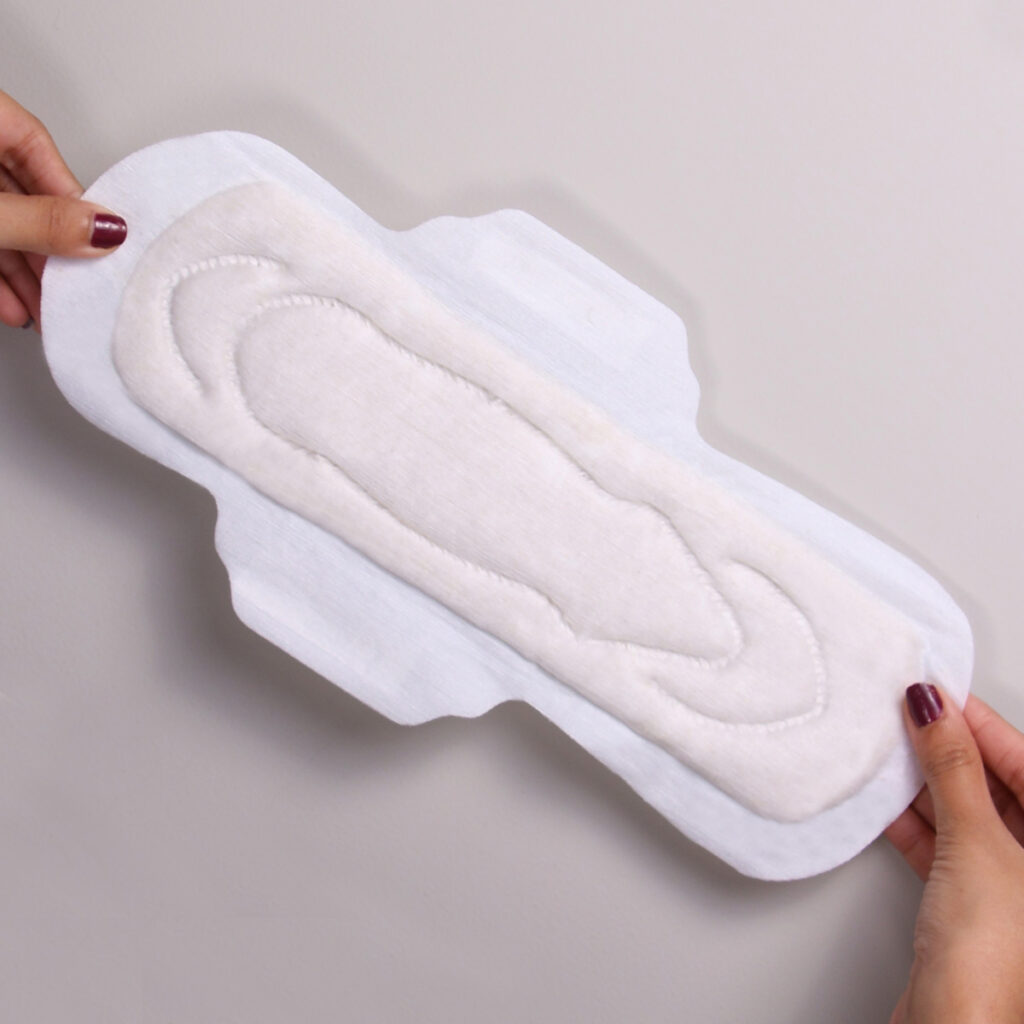
Health experts and government officials have moved to calm public fears after a recent study raised concerns about chemicals found in sanitary pads.
Speaking during a joint media briefing on Sunday (08/03/2026), Health Minister Dr Aaron Motsoaledi assured South Africans that it remains safe for women and girls to continue using sanitary pads.
The briefing followed the publication of a study by the University of the Free State’s Department of Chemistry, which detected small amounts of endocrine disrupting chemicals (EDCs) in some menstrual products.
The research, titled “The presence of endocrine disrupting chemicals in sanitary pads: A study done in South Africa,” was published last month in the Science of the Total Environment Journal.
Despite the findings, experts say there is no evidence that the chemicals pose a health risk.
“Women and girls can be reassured that it remains safe to use sanitary pads,” Motsoaledi said.
Researchers tested 16 sanitary pads and seven pantyliners purchased online.
Small amounts of EDCs were detected in all the products tested — including some marketed as “chemical-free.”
The study suggested that menstrual products could be a previously overlooked source of exposure to these chemicals.
However, scientists stressed that the research did not prove that the chemicals cause diseases such as infertility, hormonal problems, endometriosis or cancer.
The South African Medical Research Council (SAMRC) said it is important for the public to understand that these chemicals are found in many everyday products.
SAMRC President Prof Ntobeko Ntusi said the presence of a chemical does not automatically mean it is harmful.
“Just because a chemical is present does not mean that it represents a risk,” the council said.
The organisation added that the study did not establish a causal link between the chemicals and any health problems.
Experts also noted that exposure to endocrine disrupting chemicals often comes from many sources, including food, cosmetics and personal care products.
Medical specialists from the South African Society of Obstetricians and Gynaecologists (SASOG) and the South African Society of Reproductive Medicine (SASREG) also emphasised that the levels detected were very low.
They explained that the chemicals only have the potential to interfere with hormones, but this does not mean they cause health problems.
In fact, the experts said menstrual products contribute only about 6.8% to a person’s total exposure to these chemicals.
Much larger exposure comes from:
- Food (about 40%)
- Personal care products like toothpaste, shampoo and lotions (about 40%)
“The evidence at present does not support a change in usual practice,” the experts said.
The World Health Organisation (WHO) also reassured the public that there is no clear evidence linking menstrual products to disease.
WHO representatives said access to menstrual products is an important part of public health and universal healthcare.
“No clear evidence of harm to health from these types of products has been identified to date,” the organisation said.
According to the South African Health Products Regulatory Authority (SAHPRA), sanitary pads are classified as low-risk medical devices under South African law.
Although manufacturers do not require a special licence, they must still comply with international manufacturing standards.
SAHPRA said it has not received any reports of health problems linked to sanitary pads.
“It is our considered view that these products remain safe for use by the public,” the authority said
The University of the Free State also clarified that its research was not intended to advise consumers to stop using sanitary products.
Instead, the study aimed to present scientific data and identify areas that require further research.
Motsoaledi added that the findings do not require any immediate action from regulators.